
Choosing the right trailer is about more than finding one that can handle the weight of your equipment. The right trailer should fit the way you work, the type of equipment you haul, how often you transport it, and how you need to load and unload it.
With so many trailer styles available, it can be hard to know where to start. Flatbeds, enclosed trailers, drop-deck trailers, dump trailers, car haulers, refrigerated trailers, and other specialty options are each designed for different jobs.
At Flex Equipment Sales & Service, we carry trailer solutions from Air-tow Trailers, Fleming Trailers, and Polar King Mobile to help businesses find the right fit for their equipment and application.
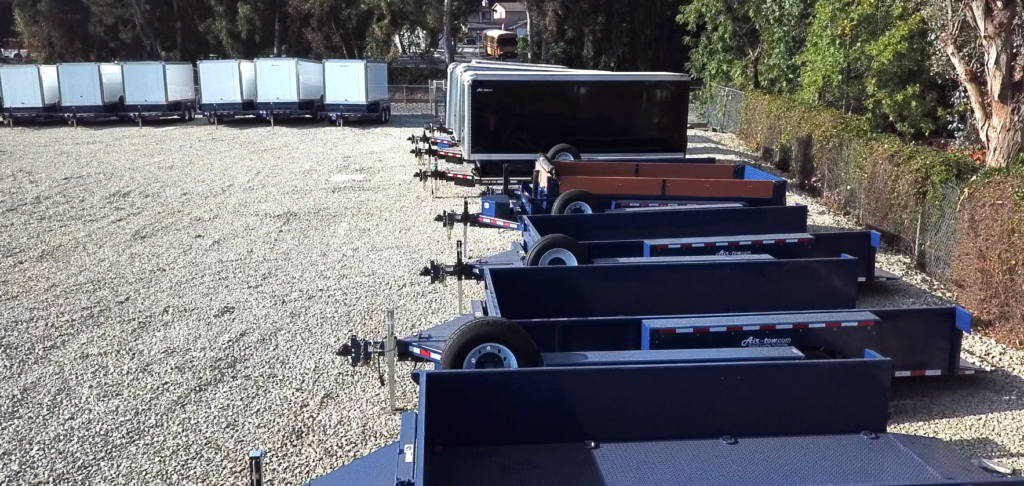
Start With What You’re Hauling
Before choosing a trailer, think about the equipment or materials you transport most often.
Ask yourself:
- How much does the equipment weigh?
- What are its dimensions?
- How high is it?
- Does it have wheels or tracks?
- How does it need to be loaded?
- Does it need protection from weather?
- Does the load require temperature control?
- Will you be hauling equipment, vehicles, materials, or a combination?
Your answers will help narrow down the type of trailer that makes the most sense for your operation.
Think About How You’ll Load It
One of the most important questions in choosing a trailer is often overlooked: how will you get the equipment on and off?
A trailer may have enough capacity for your equipment, but that doesn’t mean it’s the right trailer for the job. Consider whether you’ll need:
- Ramps
- A tilt deck
- Ground-level loading
- A forklift
- A loading dock
- A hydraulic system
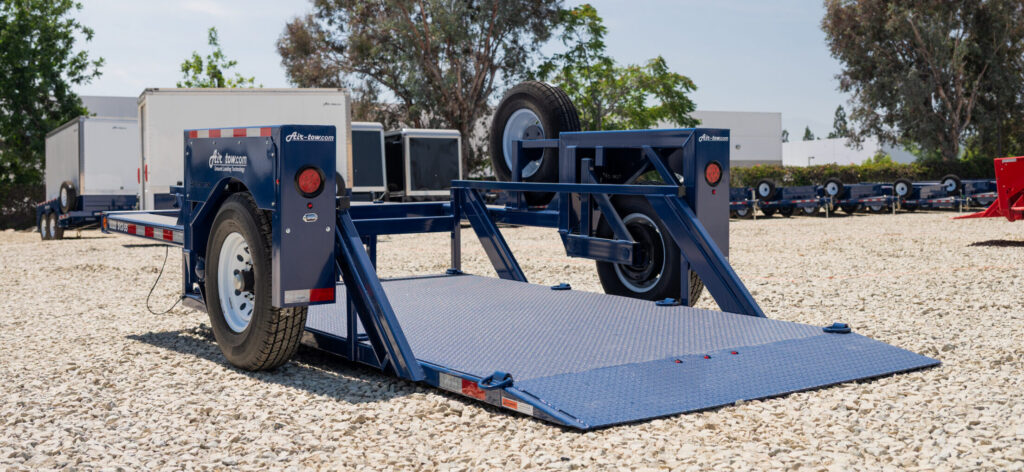
For equipment with low ground clearance, traditional ramps can create a steep loading angle that makes loading difficult or risks damage. That’s where ground-level loading comes in. Every Air-tow trailer is built with ground-level loading technology: the entire deck lowers to the ground so equipment can be driven or rolled straight on, then raises into towing position. No ramps required.
For other applications, a traditional ramp, tilt trailer, or specialized loading setup may make more sense. Keep your loading method in mind as you look at the trailer types below.
Drop-Deck Trailers: Easier Loading for Low-Clearance Equipment
In the trucking world, “drop deck” often refers to a step-deck semi-trailer. Air-tow’s drop-deck trailers are different: the entire deck lowers to the ground, so equipment rolls on at ground level instead of climbing a ramp.
This design is especially useful for scissor lifts, floor scrubbers, vending machines, forklifts, and other low-clearance equipment that’s difficult or risky to load on a traditional ramp.
If your biggest question is how you’ll get the equipment onto the trailer, a drop-deck trailer is a good place to start.
Flatbed Trailers: Versatile for Equipment and Materials
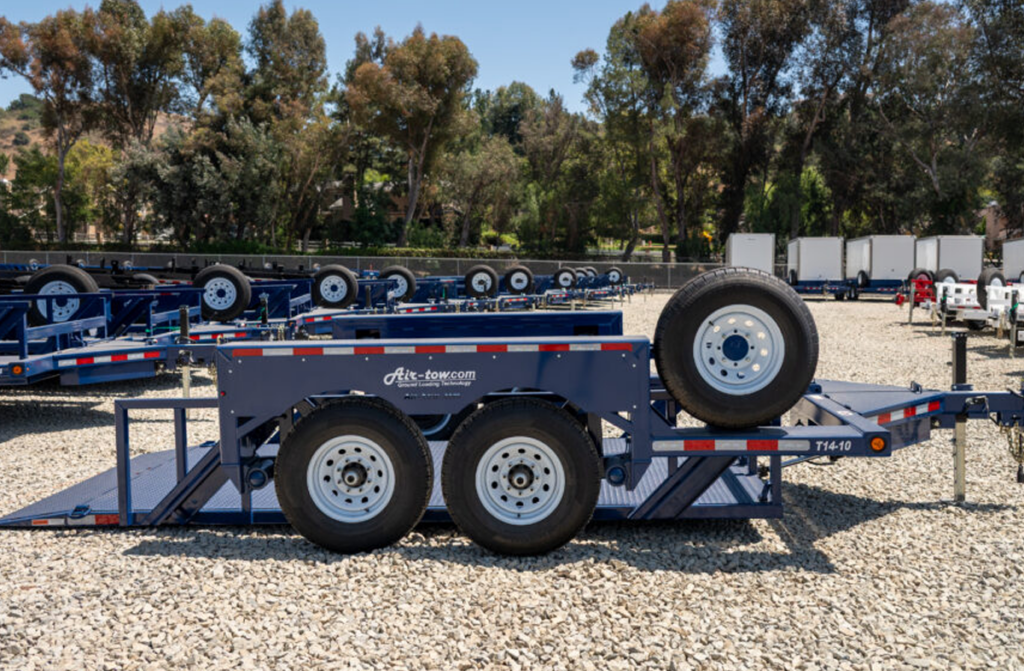
Flatbed trailers are a popular choice for businesses that need an open deck and flexibility when hauling different types of equipment and materials.
Without walls around the deck, flatbeds can carry larger or awkwardly shaped loads that won’t fit inside an enclosed trailer. They’re commonly used for construction equipment, machinery, building materials, and other large loads.
A flatbed works well if you need:
- An open, versatile deck
- Easy access from multiple sides
- Room for larger or oversized loads
- A trailer that can handle a variety of equipment
Air-tow flatbed and utility trailers come in multiple sizes to fit a range of capacities and applications.
Enclosed Trailers: Protection and Secure Storage
If protecting your equipment is a priority, an enclosed trailer may be the better choice.
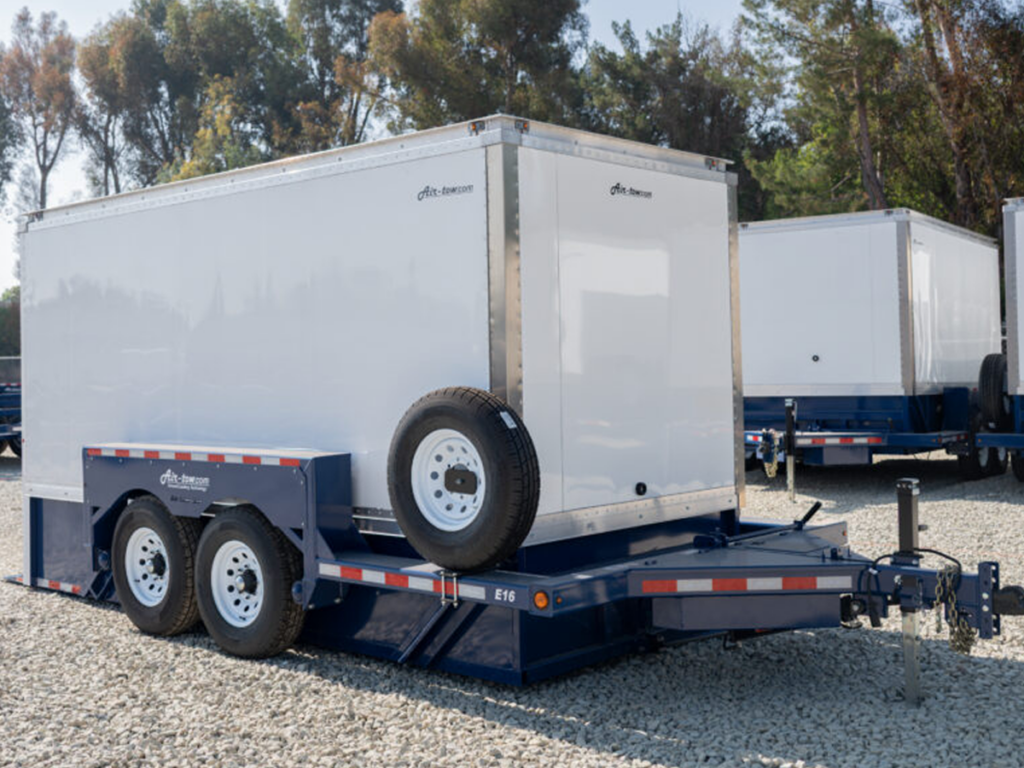
Enclosed trailers shield equipment, tools, and materials from weather and road debris while adding security and storage space. They’re especially useful for contractors, service businesses, rental companies, and anyone transporting equipment that needs to stay clean and protected.
Air-tow enclosed trailers come in multiple sizes, including models with up to a 15’9″ deck, and like every Air-tow trailer, they lower to the ground for easy loading.
Consider an enclosed trailer if you need:
- Weather protection
- Added security
- Mobile storage
- Space for tools and equipment
- A clean, protected environment for your load
Dock-Height Trailers: Load From the Dock or the Ground
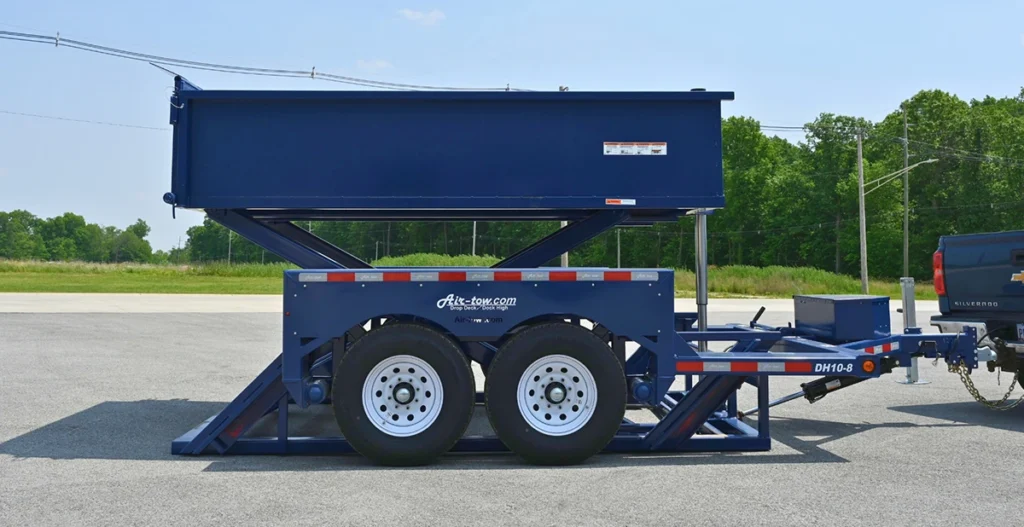
If you regularly move equipment in and out of a loading dock, a dock-height trailer can make the process much easier. These trailers raise the deck to the height of a standard loading dock so equipment and materials can move directly between the dock and the trailer.
Air-tow’s dock-height trailers combine this capability with ground-level loading, giving you the flexibility to load from a dock or straight from the ground. That’s especially useful for businesses that move equipment between warehouses, facilities, and job sites.
Dump Trailers: Built for Materials and Debris
If you mainly haul loose materials, a dump trailer can make unloading much faster.
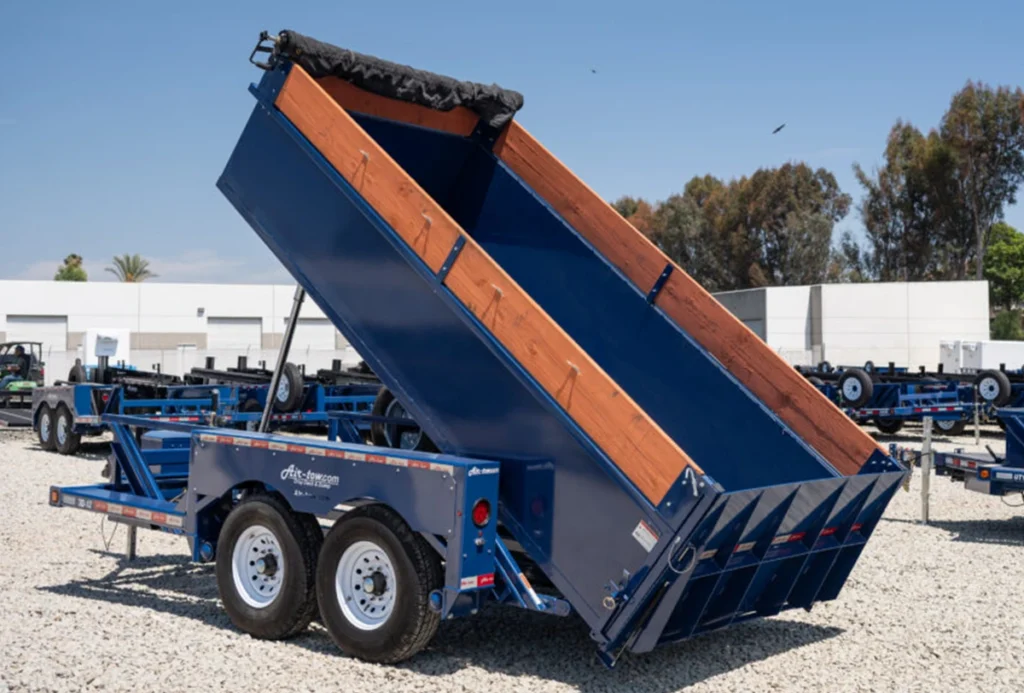
Dump trailers hydraulically raise the bed so materials like dirt, gravel, landscaping debris, and demolition waste can be unloaded without shoveling.
Fleming Trailers offers dump trailers for contractors, landscapers, farmers, and other professionals who move bulk materials.
A dump trailer is a strong fit if your work involves:
- Dirt and gravel
- Landscaping materials
- Construction debris
- Demolition materials
- Frequent loading and unloading of bulk materials
Need to haul equipment and dump materials? Air-tow’s 3D Drop-Deck/Dump trailer is a two-in-one solution. It combines ground-level equipment loading with dump capability, so one trailer can handle multiple jobs.
Car and Equipment Haulers: Transport Vehicles and Heavy Equipment
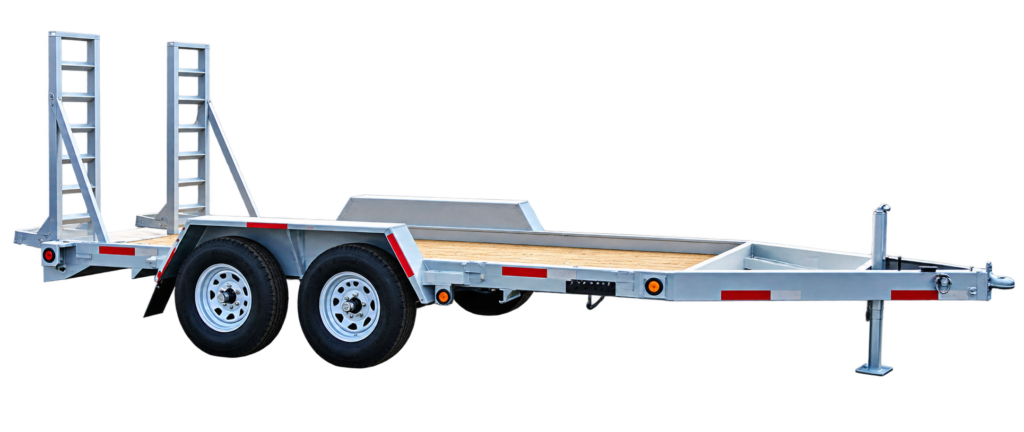
If you haul cars, trucks, construction equipment, or other wheeled equipment, a dedicated car or equipment hauler may be the best fit.
Fleming Trailers offers heavy-duty car and equipment haulers with low decks, loading ramps, and tie-down points to keep the load secure during transport.
These trailers are built for regularly hauling:
- Cars and trucks
- Construction equipment
- Landscaping equipment
- Agricultural equipment
- Other wheeled equipment
Gooseneck Trailers: For Larger, Heavier Loads
For businesses that regularly haul heavier equipment, a gooseneck trailer offers added stability and capacity.
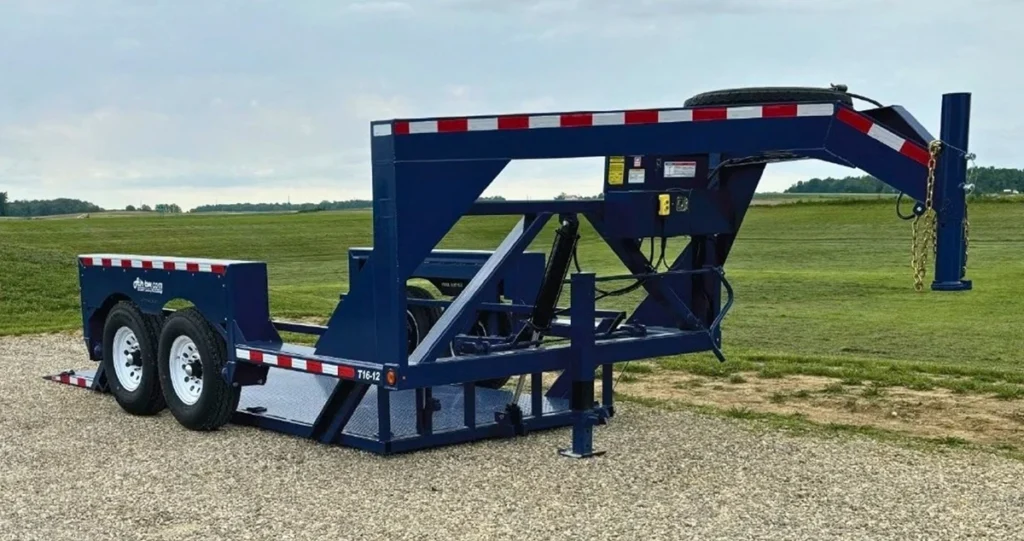
The gooseneck hitch connects in the bed of the tow vehicle, farther forward than a bumper-pull hitch. This distributes weight more evenly and improves stability on the road.
Gooseneck trailers are a good option for tractors, skid steers, excavators, and other machinery. Air-tow offers ground-level loading gooseneck models in 14′ and 16′ lengths.
Whatever you choose, make sure both the trailer and the tow vehicle are rated for the load you plan to carry.
Refrigerated Trailers: When Temperature Matters
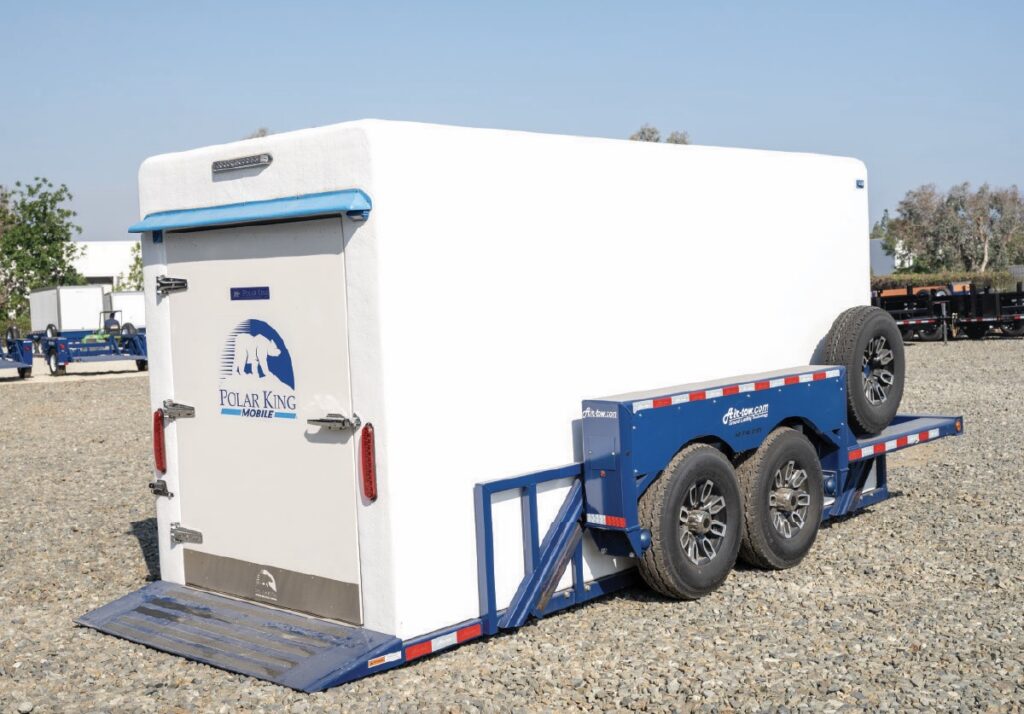
If your cargo needs to stay within a specific temperature range, a refrigerated trailer provides mobile, temperature-controlled space for transporting or storing food, beverages, pharmaceuticals, and other temperature-sensitive goods.
Polar King Mobile specializes in mobile refrigerated solutions built for dependable temperature control wherever it’s needed.
For applications that need both refrigeration and easy loading, Air-tow Trailers and Polar King Mobile teamed up to create ground-level loading refrigerated trailers. These models pair Polar King’s refrigeration technology with Air-tow’s ground-level design, so carts, pallet jacks, and equipment can be rolled or driven directly onto the deck without ramps.
When choosing a refrigerated trailer, make sure its temperature range and refrigeration system match the needs of your cargo.
Don’t Forget About the Tow Vehicle
The trailer is only part of the equation. Your tow vehicle needs to safely handle the trailer and everything on it.
Before you buy, check:
- Tow vehicle towing capacity
- Trailer GVWR (gross vehicle weight rating)
- GCWR (gross combined weight rating) of the truck and trailer
- Payload capacity
- Hitch rating
- Tongue weight
- Trailer brake requirements, which vary by state
Never choose a trailer based only on its empty weight or the weight of your equipment. The trailer, the equipment, and any additional cargo all add to the total weight being towed.
Which Trailer Is Right for You?
No single trailer is best for every business. The right choice depends on what you haul and how you work.
If you need to… | Consider… |
| Haul a variety of equipment and materials | Flatbed or utility trailer |
| Protect equipment from weather | Enclosed trailer |
| Load low-clearance equipment easily | Drop-deck or ground-level loading trailer |
| Haul and dump materials | Dump trailer |
| Haul equipment and vehicles | Car/equipment hauler |
| Transport temperature-sensitive products | Refrigerated trailer |
| Move heavier equipment | Gooseneck trailer |
| Handle multiple jobs with one trailer | Air-tow 3D Drop-Deck/Dump |
| Load and unload at a dock | Dock-height trailer |
Find the Right Trailer for Your Application
The best trailer isn’t necessarily the biggest one or the one with the highest capacity. It’s the one that fits your equipment, your tow vehicle, and the way your business runs.
At Flex Equipment Sales & Service, we offer trailer solutions from Air-tow Trailers, Fleming Trailers, and Polar King Mobile, giving you access to a wide range of equipment, hauling, and specialty trailers.
Not sure which trailer is right for your equipment? Our team can help you find one that fits your application. Contact Flex Equipment Sales & Service to talk through your needs.